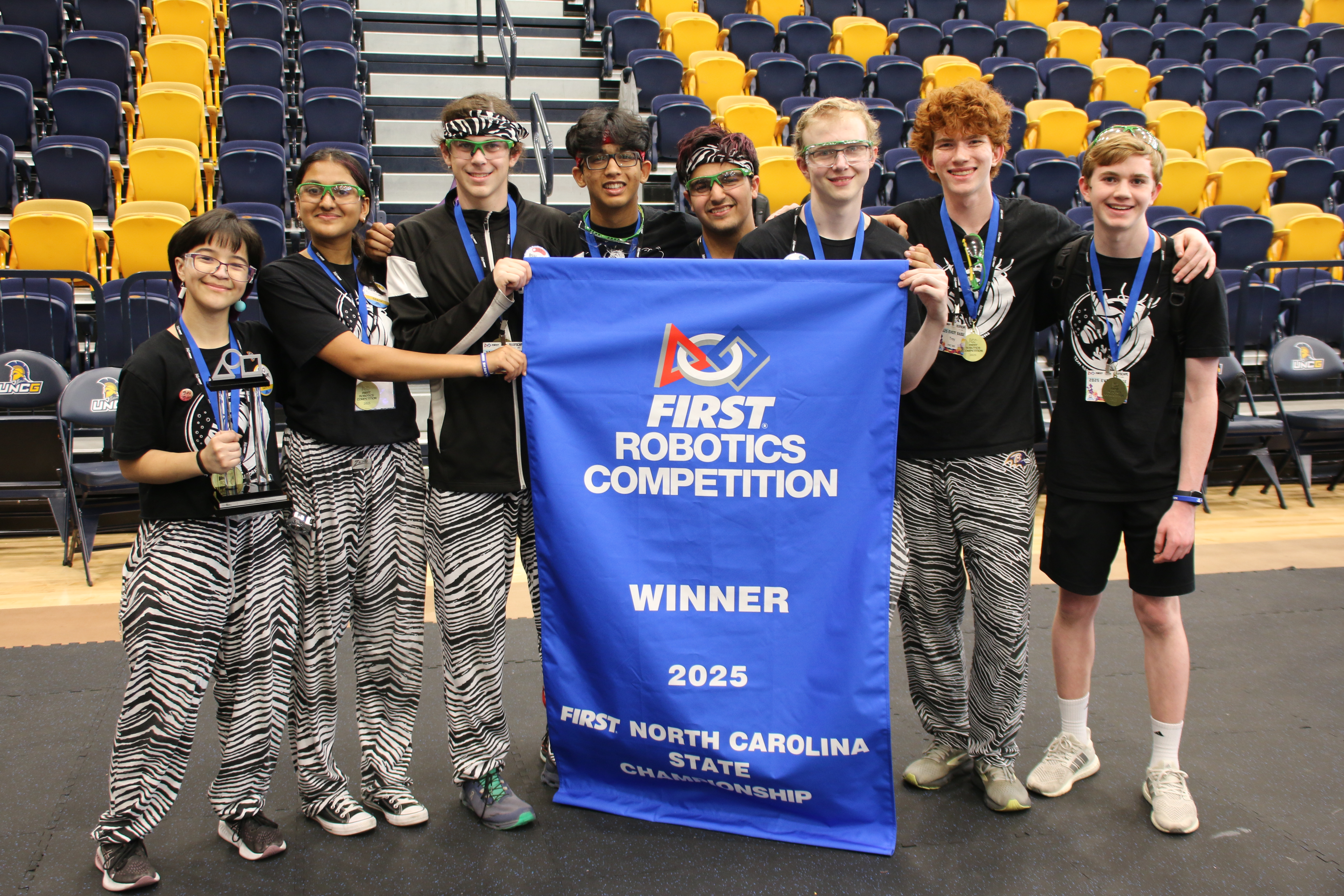
C4 was the Zebracorns’ robot for REEFSCAPE, the 2025 FIRST Robotics Competition game. After a 2024 season where we took on too many capabilities, we focused on placing game pieces at different heights and making that core task reliable. Leaving algae scoring and deep climbing outside our scope gave us more time for tuning, driver practice, and resolving mechanical issues.
As Design and Mechanical Lead, I directed a 25-member mechanical team and five-member CAD team through prototyping, fabrication, and integration of the 150-lb robot. With significant mentor and senior-member turnover, that also meant helping newer students take ownership of their work. I developed the master geometry, designed the elevator, and managed our Onshape workspace and public CAD releases.
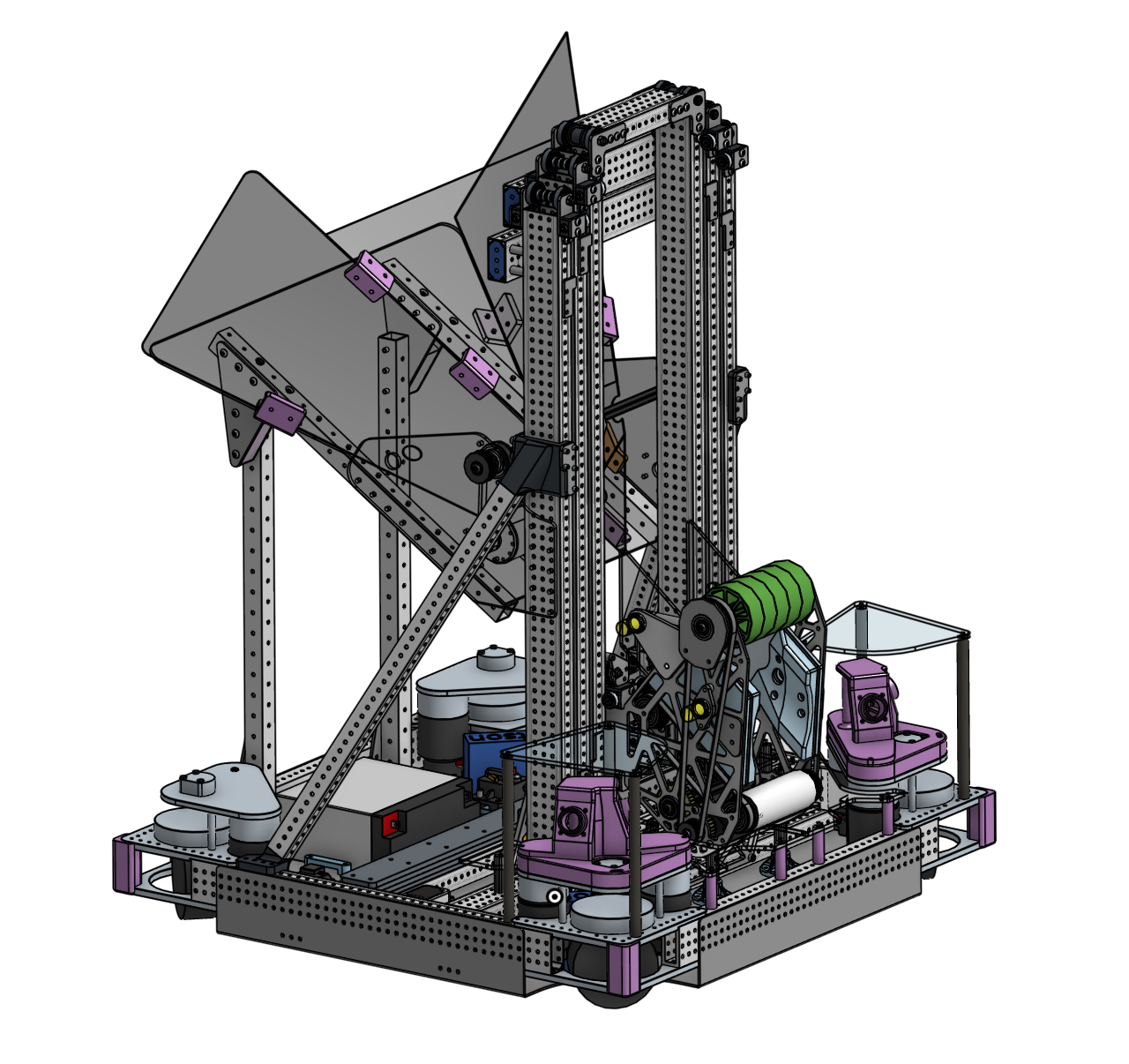
A compact elevator with room to reach
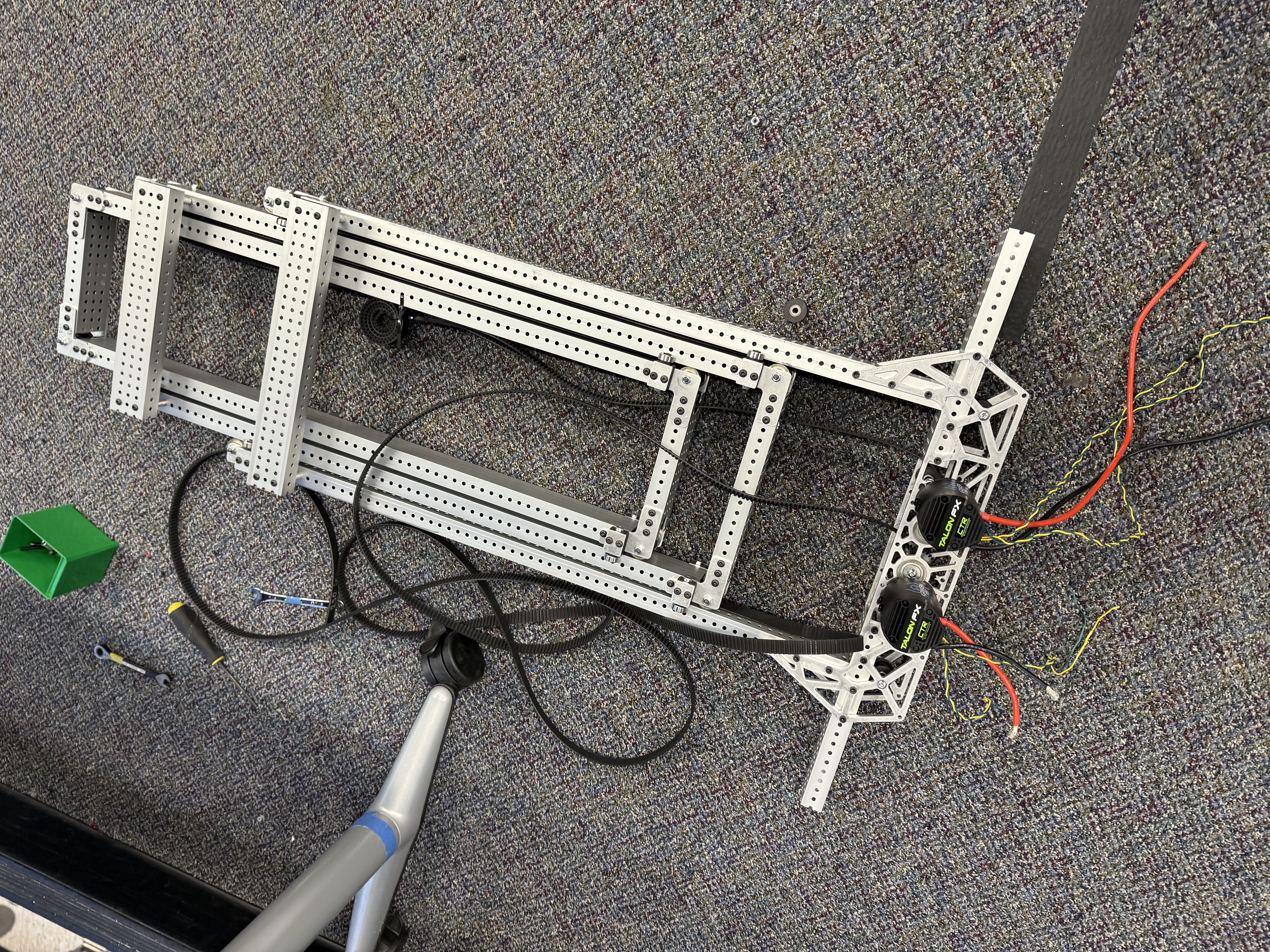
The elevator was a three-stage lifting mechanism: 36 inches tall when stowed and 74 inches when extended. Its structure combined machined 6061 aluminum tubes and sheet, custom Markforged–aluminum bearing blocks, and off-the-shelf hardware.
A compact 3:1 gearbox used two Kraken X60 motors to drive two internally routed HTD 5 mm belts. Master sketches controlled the belt paths and robot geometry; custom Onshape FeatureScripts generated pulleys and gears. These choices helped reduce the assembly’s thickness from more than 5.5 inches to less than 4 inches.
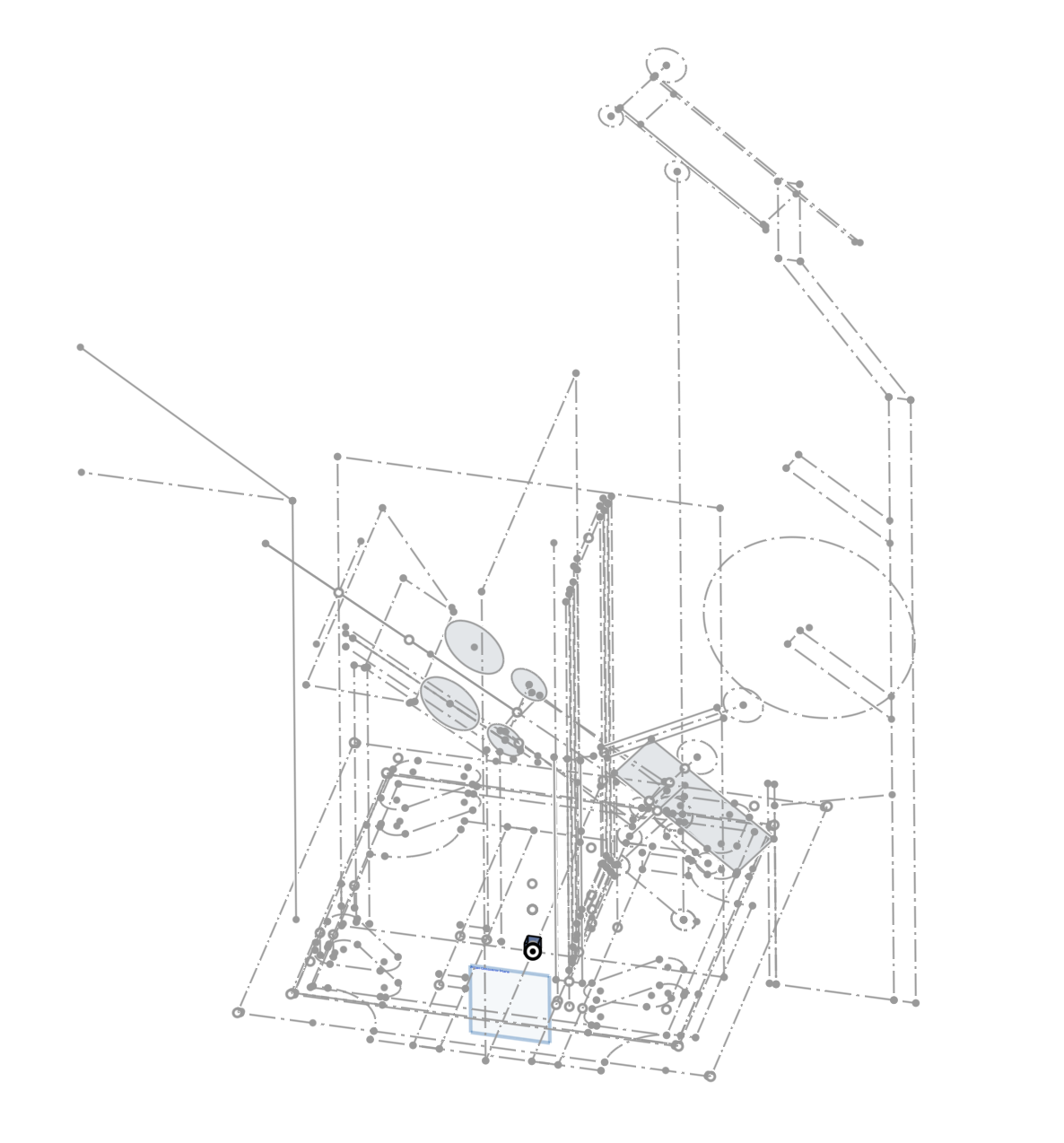
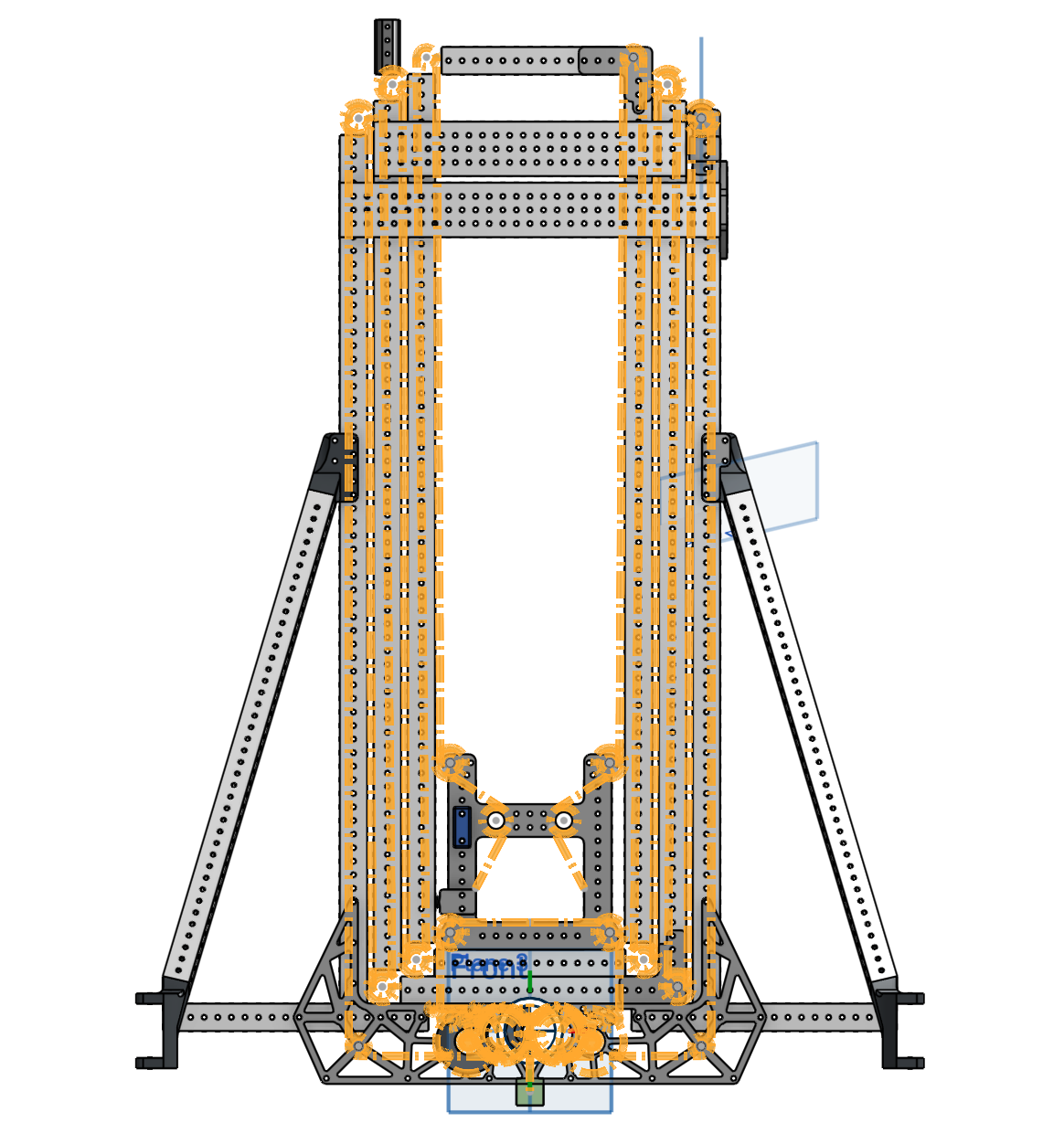
Designing around our manufacturing tools
I used surface modeling for structural supports and combined Markforged printing with waterjet-cut aluminum for the custom bearing blocks. That manufacturing change reduced cost by roughly 40% and shortened subsystem lead time by about two weeks compared with the original approach.
Season results
The elevator had no mechanical failures during competition. The team won the 2025 NC Championships, ranked second in North Carolina and in the top 11% of FIRST Robotics Competition teams worldwide, and finished its second-best season in 23 years.
I also co-presented on mechanical design to an audience of more than 200 at the 2025 FIRST Championship in Houston. Alongside the robot work, I continued sharing CAD resources, including the configurable bumper design I had developed in an earlier season.